
A nightstand can seem too small, too dark or simply out of place when the real problem is sitting on top of it. An oversized lampshade crowds the surface. An awkward switch makes bedtime inconvenient. A harsh overhead light leaves otherwise attractive wood looking flat. Replacing the furniture might change the appearance of the room without resolving any of these frustrations.
Before arranging a furniture pickup or ordering a matching bedroom set, spend a few evenings noticing what actually gets in the way. Keeping a useful piece in service starts with making it work for daily life. Sometimes that requires a repair or a different position. Sometimes it means changing the lighting. Often, it begins with removing things rather than adding them.
Separate a Furniture Problem from a Lighting Problem
Empty the nightstand completely and examine it on its own. Does it stand securely? Do the drawers open without catching the bed frame? Is its surface within comfortable reach from the mattress? A loose handle and a crowded tabletop are different problems from an unstable cabinet or a piece that blocks the walkway.
Put back only what you use overnight: perhaps a book, glasses and a phone. Then return the lamp. If the surface suddenly becomes impractical, you have identified a specific issue to address. A larger cabinet may be unnecessary if the lamp takes up more room than its job requires.
Also look at the room with the ceiling light switched off and your existing bedside lighting on. This is a useful way to judge how the space feels during its normal evening use. Furniture that appeared heavy under a bright central light may look perfectly at home when light is closer to where you sit or lie.
Test a Different Lamp Before Purchasing One
Borrow a suitable lamp from another room for a few evenings. The purpose is to test its footprint, height and position, even if its appearance is not what you would ultimately choose. Move it between the back corners of the nightstand and notice how much usable space remains.
Measure both the base and the shade. A narrow base does not necessarily mean a compact lamp: a broad shade can project into the pillow area or interfere with reaching across the table. A paper outline on the tabletop can help you compare dimensions before bringing another object home.
If a smaller decorative light would solve the problem, compare small Tiffany style bedside lamps against those measurements. Check the individual dimensions rather than relying on the category name. Allow space for the shade as well as the base, and keep the whole lamp securely supported on the furniture.
Do not assume a compact lamp will also provide enough light for extended reading. Test whether the page is comfortably visible in your usual position. If you already have an effective reading light, a decorative lamp may serve a separate purpose—or you may decide that another light is unnecessary.
Keep the Furniture That Works, Even When It Does Not Match
Two people sharing a bedroom rarely use their bedside space in exactly the same way. One may need drawers for everyday items; the other may prefer an open shelf and a clear surface. Replacing both pieces simply to create a matching pair can discard useful storage without improving either person’s routine.
Different nightstands can look intentional when they share a few visual connections. A repeated wood tone, similar hardware or a common color in the bedding can bring them together. They do not need identical dimensions or identical lamps, especially when the available space differs on each side of the bed.
Start by moving existing accessories between rooms. A plain ceramic dish from a hallway might work for glasses. A throw already stored in a cupboard may connect two different wood finishes. Make these adjustments before deciding that the furniture itself is the part that needs replacing.
Use One Decorative Detail to Bring the Room Together
A bedroom assembled over time can contain several finishes: an older oak bedside cabinet, a darker bed frame and a painted dresser. Rather than trying to make every piece match, choose a small number of colors that already appear in the room and repeat them selectively.
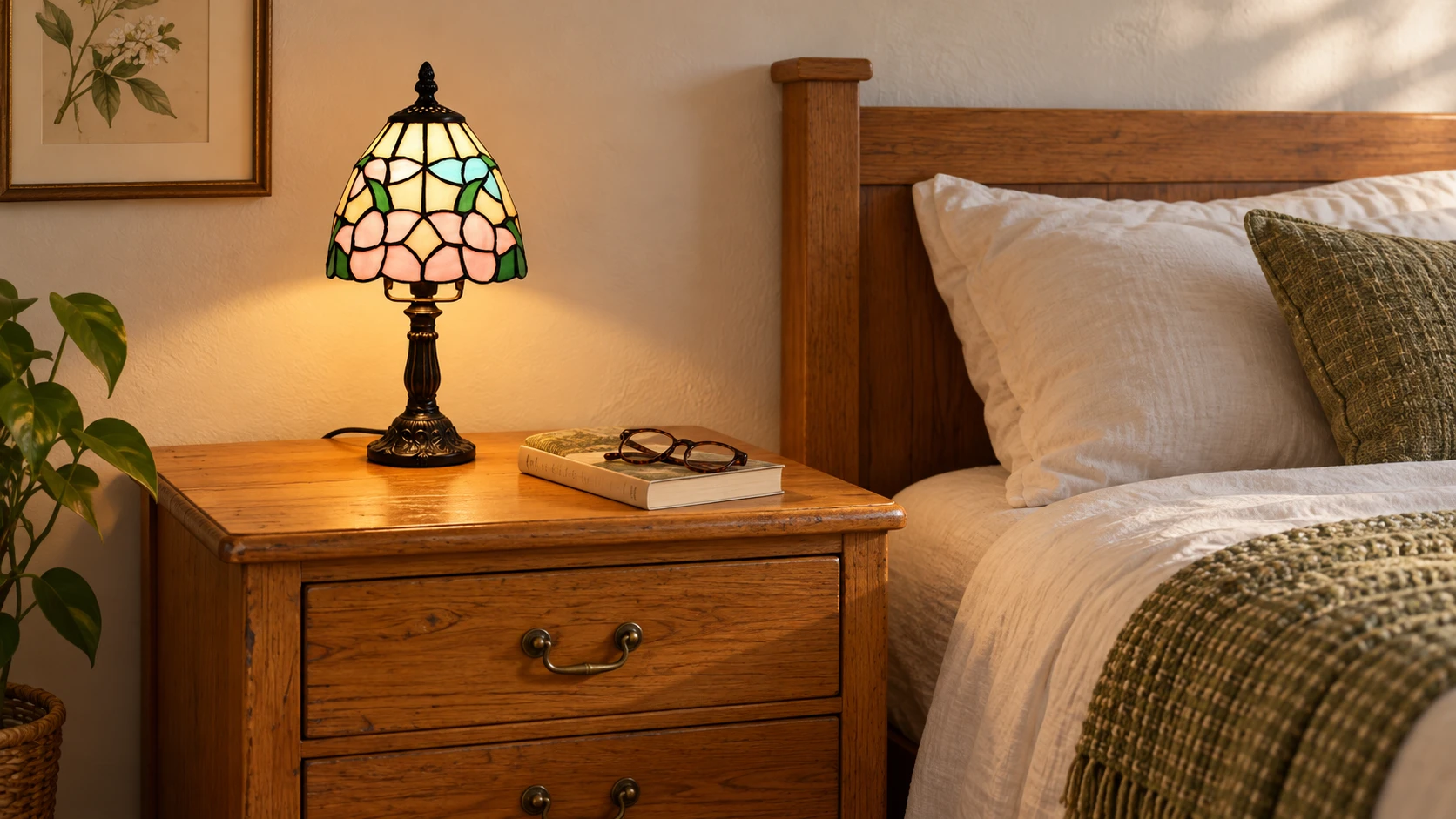
A flower Tiffany table lamp can provide that connection when its glass includes colors found in existing textiles or artwork. Green leaves might relate to an olive throw, while cream panels sit comfortably beside pale bedding. The floral pattern supplies detail without requiring a new headboard, wallpaper or coordinated furniture set.
Give a patterned shade some space around it. A crowded collection of ornaments can make the nightstand less useful and obscure the lamp’s design. One book and a small personal item may be enough. The aim is to make the furniture easier to enjoy, not to cover its surface with a new collection of accessories.
A vintage appearance alone does not make a new purchase sustainable. The practical question is whether the lamp fills a real gap, fits the furniture you intend to keep and is something you expect to use for years.
Make Small Repairs Before Committing to a Larger Refresh
Look for straightforward maintenance needs while the tabletop is clear. Tightening a suitable loose handle or replacing a missing furniture pad may resolve an everyday irritation. Follow the furniture manufacturer’s guidance where available, and seek advice for damaged joints, valuable pieces or unfamiliar finishes.
Minor surface wear does not automatically call for sanding and repainting. A finish-appropriate cleaning may be sufficient. Keeping a sound original finish also avoids turning a manageable refresh into a larger project with additional materials and drying time.
Make the lighting arrangement convenient as well as attractive. The switch should be accessible from the position in which you normally use it. Route the cord so it is not trapped by a drawer or stretched across a walking route. If an existing lamp has damaged wiring, a loose socket or unreliable operation, stop using it and have it assessed by a qualified repair professional.
When choosing a replacement bulb, follow the fixture’s specified requirements. Confirm the fitting, permitted wattage and any enclosure or dimmer compatibility. A bulb change can be worth evaluating before replacing an otherwise suitable lamp.
Live with the Changes Before Removing Anything
Give the revised arrangement a week of ordinary use. Notice whether the surface stays clear, whether the switch is easy to find and whether you can open drawers without moving the lamp. A room can look convincing in a photograph and still be frustrating at bedtime.
If a nightstand genuinely no longer fits your needs, identify its next destination before replacing it. It might work beside a sofa or in a guest room. For resale or donation, record its dimensions, photograph its condition honestly and confirm that the recipient or collection service accepts it. Keeping an unsuitable item indefinitely is not the only alternative to disposal.
The most useful bedroom refresh may leave the bed, dresser and nightstands exactly where they are. A clearer surface, a repaired handle and a better-positioned light can make familiar furniture feel useful again. That is a meaningful result: a room that works better, with fewer good pieces leaving it.