
Moving plans usually begin with the largest possessions: the sofa, dining table, beds and appliances. Decorative wall lights are easier to overlook. They remain attached while everything around them disappears into boxes, until someone has to make a hurried decision about whether they are staying or going.
That last-minute decision can turn a useful fixture into an awkward moving problem. Its glass shade needs protection, its mounting parts can disappear into a general hardware box, and nobody may have checked whether it has a suitable place in the next home.
Including lighting in your moving plan gives existing pieces a better chance of remaining in use. The aim is to arrive with fixtures that are complete, undamaged and ready for an appropriate new location.
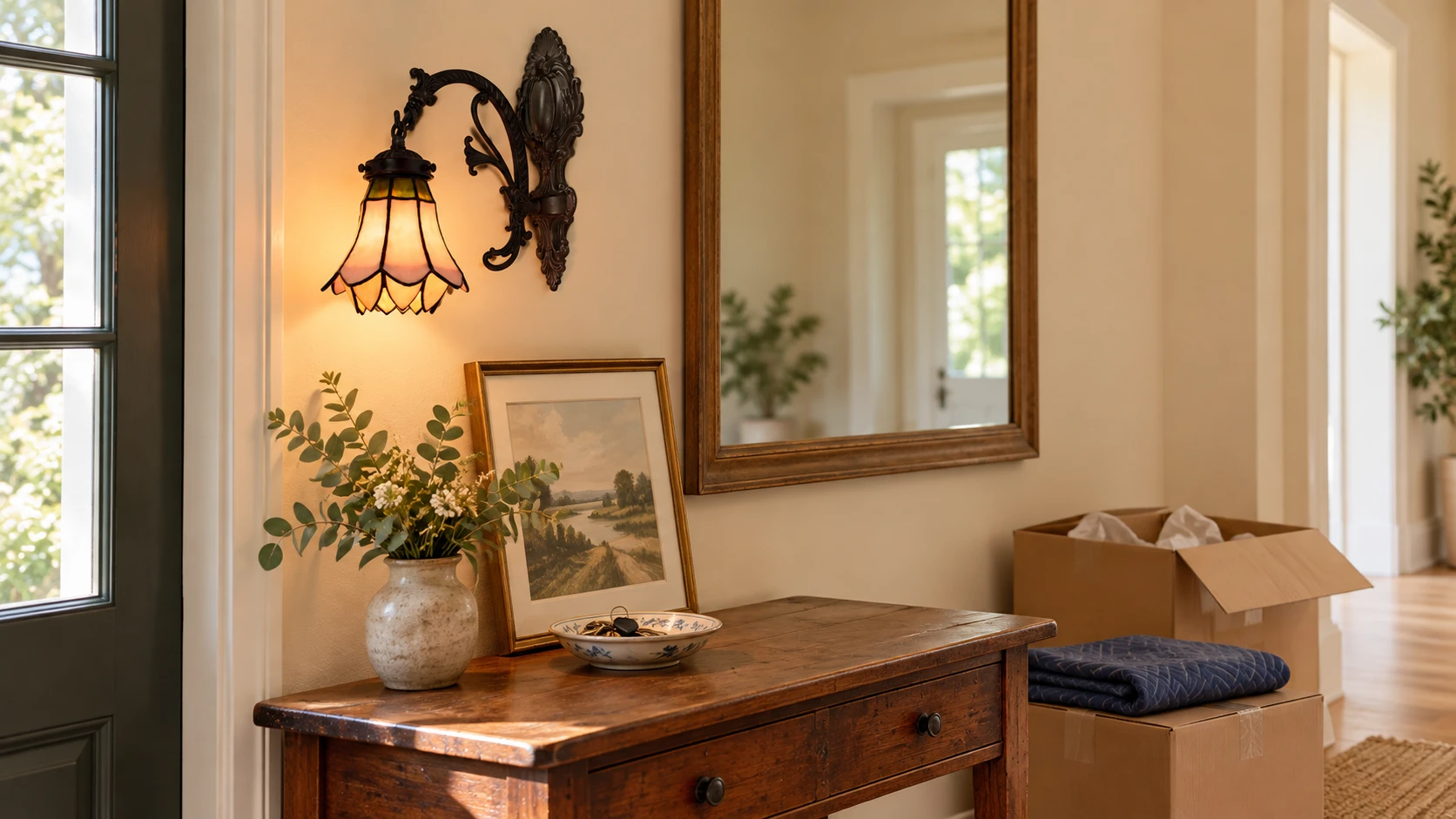
Decide What Is Moving Before Packing Begins
Walk through the property and list the decorative lights you hope to keep. Before arranging removal, confirm which fixtures are included in the property handover or belong to the landlord. Resolve any uncertainty with the relevant people while there is still time to agree on what stays and what replaces anything being removed.
For each light that can move, record its dimensions, condition and original room. Take photographs of the complete fixture and any accessible identifying labels. Save the manufacturer’s instructions or product details if you have them.
Think about why you want to retain it. A light may have sentimental value, suit furniture you already own or provide an effect you still enjoy. Those are useful reasons to find it a new home. Packing something simply because a box is available can result in years of storage without a realistic plan.
Choose the New Location Around the Furniture You Are Keeping
Start with the destination room rather than assuming that a fixture must return to its previous role. A light from an old dining room might work beside a console in the new entrance. A bedroom fixture might bring useful background light to a seating area.
Decorative pieces such as Tiffany wall lights have a visible presence even when switched off. When planning a new position for a fixture you already own, consider its glass colors alongside the wood, upholstery and artwork that are making the move with you. This can help an existing group of possessions feel at home in a different space.
Measure the fixture’s width, height and projection from the wall. Compare these with nearby door swings, shelves, curtains and walking routes. A light that fitted comfortably above a wide sideboard may feel intrusive in a narrow hallway.
A paper outline can help you judge the visual size of the backplate or shade. It cannot confirm that the wall, wiring or mounting arrangement is suitable. Have those practical details checked before treating the position as final.
Schedule Removal as Its Own Moving Task
Hardwired lighting needs a separate arrangement from ordinary furniture packing. Book a qualified electrician to disconnect the fixtures, leave the original installation safe and assess what will be needed at the destination. Allow enough time for any agreed replacement lighting before the property handover.
Tell the moving company that you have fragile decorative fixtures. Share photographs and dimensions, particularly where a shade has projecting glass edges or an unusual shape. Ask who will prepare the packaging and whether specialist packing is appropriate.
Inspect the fixture before it enters a carton. Cracked glass, loose sections or a bent arm should be identified before transport. A damaged shade may need professional attention or a different packing method; hiding the problem beneath more wrapping does not resolve it.
Keep Small Parts Connected to the Right Fixture
A missing bracket or shade-retaining component can delay reuse even when the visible light arrives intact. Assign each fixture a simple reference, such as “Entrance Light 01,” and use it on the carton, photographs and parts packet.
Place removable hardware in a sealed, labeled bag within a separate protected compartment. Keep metal pieces from touching the glass during transport. Include a printed note identifying the fixture and the location of its instructions.
Where disassembly is appropriate, follow the manufacturer’s guidance and let the electrician or specialist packer handle unfamiliar fittings. Some shades detach readily; others should remain supported as part of the assembly.
Keeping original components is useful, but it does not mean every old screw or wall anchor should be reused. The installer should select fixings suitable for the new wall and the fixture’s load.
Protect the Shape, Not Just the Surface
A decorative shade needs packaging that supports it without concentrating pressure on fragile edges. Wrapping can prevent rubbing, but the carton and internal supports must also prevent movement and contact with heavier components.
Use the original fitted packaging if it is available and still sound. Otherwise, ask a packer experienced with fragile lighting to select an arrangement suited to the particular fixture. Avoid forcing an irregular shade into a box that leaves no room for cushioning.
Do not apply packing tape directly to glass, decorative finishes or metalwork. Keep separately packed components from knocking together, and mark the carton with handling instructions that reflect how it has actually been packed.
Reusing strong cartons and suitable protective materials can reduce packing waste. Their condition matters: a crushed box or cushioning that no longer holds the item securely is a poor trade-off if it leads to breakage. Fragile lighting should travel away from loads that can shift onto it.
Check Compatibility Before Trying to Complete a Matching Set
After moving, it can be tempting to purchase an additional fixture immediately so that a room looks symmetrical. First, see whether the retained light works as a single feature. An entrance console, small alcove or reading area may not need a matching pair.
If a second fixture is necessary, use collections of Tiffany wall sconces to compare shape, shade dimensions and bracket design. Similar colors alone do not establish a match, and a product photograph cannot confirm that parts are interchangeable.
Check the exact model information, local electrical suitability and installation requirements before ordering. This is especially important when comparing products sold in different countries. A deliberate purchase is more useful than an almost-matching fixture that eventually joins the unused items in storage.
Unpack with Reinstallation in Mind
Inspect the fixture and its components after arrival, using the earlier photographs as a reference. Keep everything together until installation. If you discover damage, photograph it and contact the relevant mover or supplier before discarding the packaging.
Arrange an electrical assessment before putting an unfamiliar, damaged or long-stored fixture back into service. Once installed, judge the light from the positions where people will actually use the room. Check its relationship to seating, mirrors and circulation, rather than evaluating it only from the doorway.
If the fixture ultimately has no suitable place, choose its next destination promptly. A local reuse organization or architectural salvage business may be able to advise, but confirm acceptance before arranging delivery. Provide an honest description of its condition and include the associated parts.
A successful move does not require every room to start with new possessions. A familiar wall light above a retained console can help a new entrance feel settled. Planning for that outcome before the boxes arrive is what keeps a useful object from becoming another forgotten item in storage.