
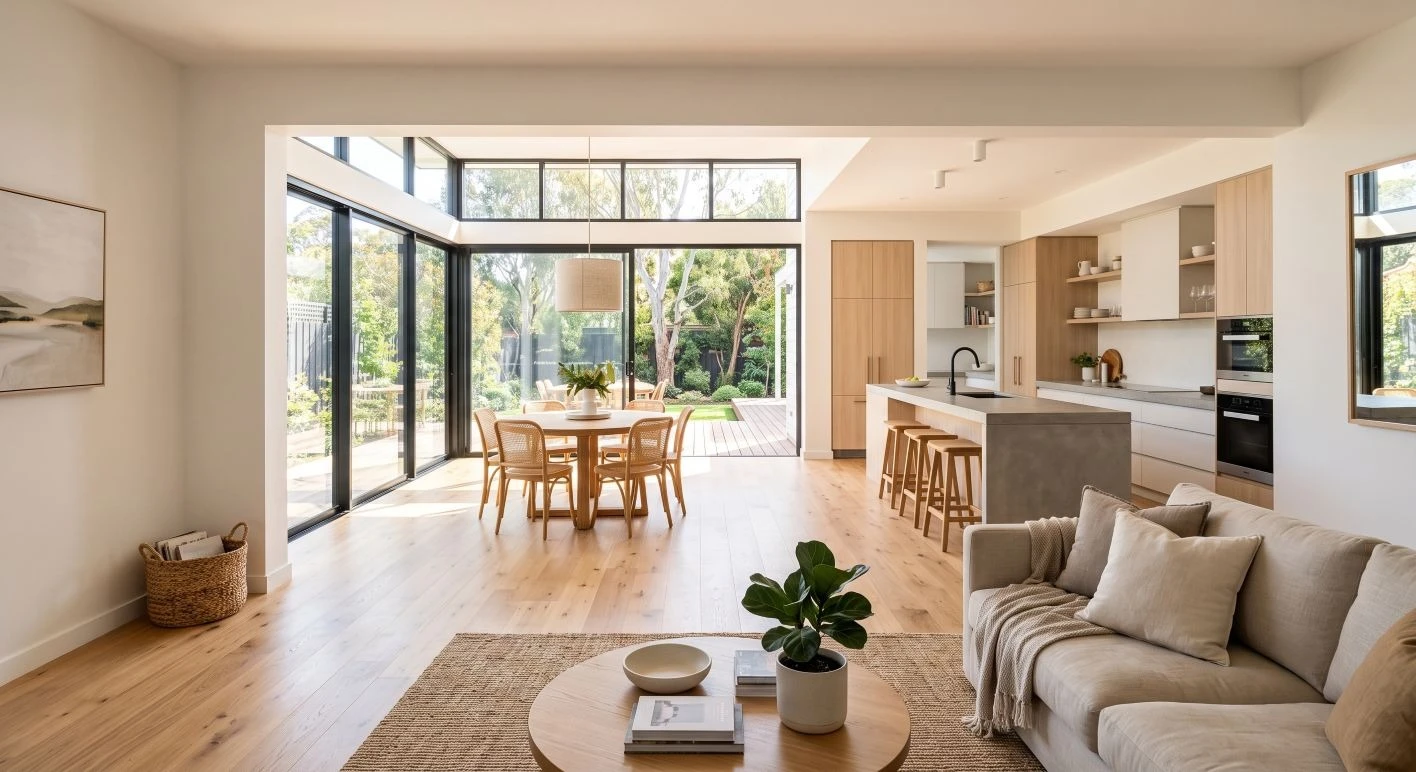
A living room that feels dark and closed off is a common issue. You walk in and immediately reach for the light switch even at noon. Relying on artificial light all day changes the feel of a room and pushes up your energy bills. It also makes spaces feel smaller than they actually are.
Getting natural light right takes a mix of structural planning and smart interior choices. Here is how you can pull more sunlight into your living space and keep it there.
Start with the orientation and layout
In Australia, a north facing living area is the gold standard. It catches the lower winter sun to warm the house while avoiding the harshest summer glare. If you are renovating or building from scratch, getting this alignment right is priority one. But if you are working with an existing layout that faces south or east, you have to rely on how daylight moves through the interior floor plan.
Look closely at your internal walls. Solid walls obviously block natural light from traveling between rooms. Opening up a non load bearing wall between a dark living room and a brighter adjoining kitchen can completely change the daylight levels in both spaces. If knocking down walls is out of the budget, consider swapping solid internal doors for glass panelled ones.
Widening doorways or adding internal glazing lets light spill from high exposure areas into darker zones without losing the physical separation of the rooms. This approach is highly effective in older style terrace houses where the middle rooms rarely see the sun.
Rethink your window treatments
Thick curtains and dark shutters block too much natural light. Even when opened, their bulky frames and fabric still cover parts of the window. Every square centimetre of the window pane counts when you are trying to brighten a room.
Switching to slimline roller blinds or sheer curtains makes an immediate difference. Sheers filter harsh direct sunlight and provide daytime privacy while still letting a huge amount of ambient light into the room. If you need blockout options for movie nights or summer heat protection, install a dual track system. You keep the heavy blockout layer rolled up and completely out of the glass line during the day.
Window tinting is another area that trips people up. Older tinted films designed to block heat often turn the incoming light a gloomy grey or green. Upgrading to modern spectrally selective window films blocks the UV rays and heat transfer without tinting the visible light.
Choose reflective surfaces and lighter colours
Dark colours absorb light. Matte finishes absorb light. If your living room features dark charcoal walls, navy rugs and matte timber floors, any sunlight that manages to get in stops dead.
You don’t need to paint everything stark hospital white to fix this. Warm off whites, pale greys and soft earthy tones bounce light around the room effectively while keeping things comfortable. Finish your ceilings in flat white to maximize the vertical reflection. The ceiling is your largest uninterrupted reflective surface.
Gloss and semi gloss finishes also help carry light further. A polished timber or polished concrete floor reflects light upwards. Wall mirrors are a classic trick for a reason. Placing a large mirror on the wall directly opposite or adjacent to your main window bounces incoming light deeper into the floor plan. Even swapping out matte cabinetry for a satin finish helps ping light into the darker corners.
Position your furniture strategically
Where you put your couch matters just as much as the colour of your walls. Pushing a bulky dark modular sofa right up against a low window blocks the main entry point for light. Keep furniture away from the glass. Low profile pieces allow sunlight to wash over them and reach the rest of the room.
Opting for a complete coastal furniture package is actually one of the most effective ways to instantly brighten a living space. Because these collections are designed around bleached timbers, natural textures, and light linen fabrics, they inherently reflect light rather than absorb it. By coordinating low-profile, light-toned pieces, you completely avoid the heavy shadows caused by mismatched or bulky dark furniture. Just remember to float these pieces slightly off the walls to create breathing room, making the entire area feel open and luminous.
Re-evaluate your flooring choices
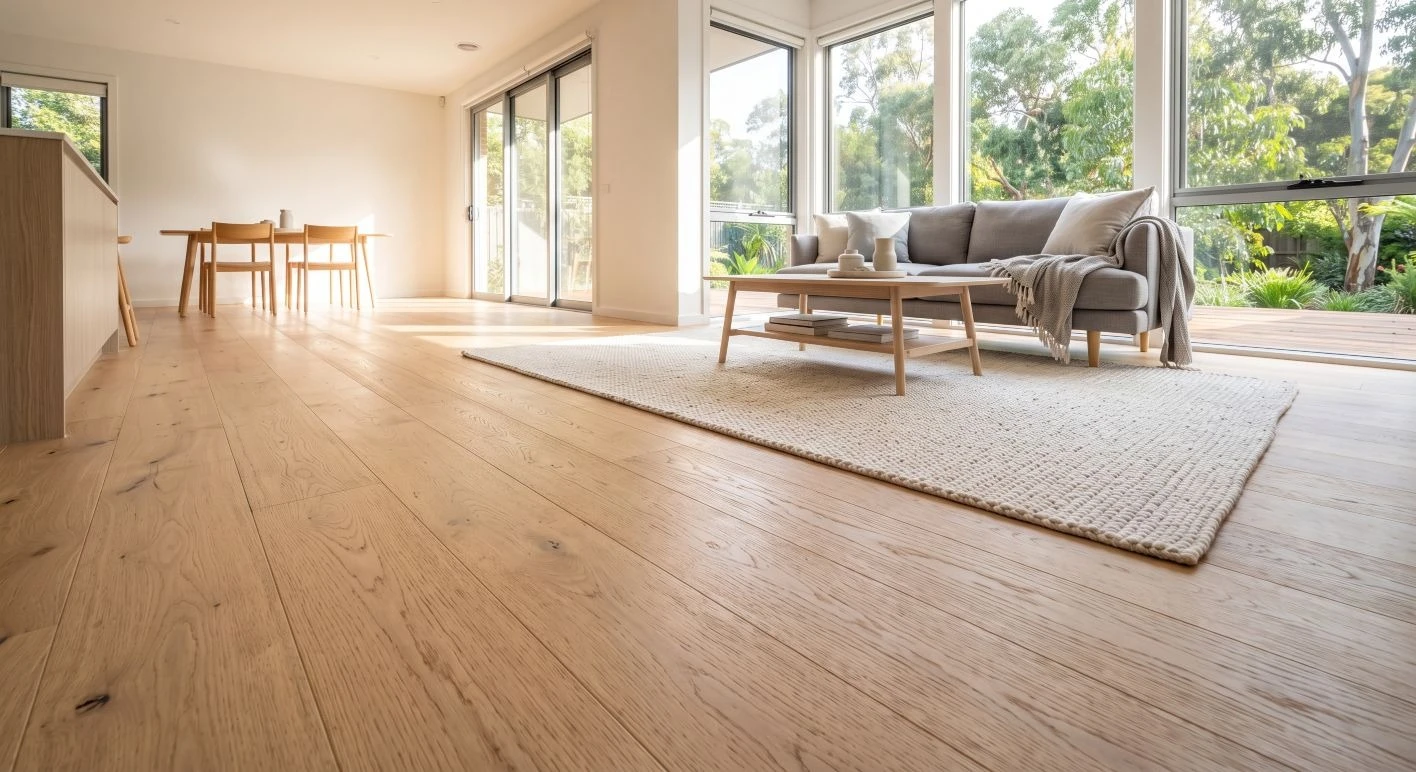
Flooring covers a massive surface area in your living room and plays a huge role in how light behaves. Dark carpets suck the light right out of a space. If your living room receives limited natural sunlight to begin with, a dark floor will make it feel like a cave regardless of how light your walls are.
Switching to lighter flooring options creates an immediate uplift. Pale oak floorboards, light coloured polished concrete, or large format light tiles reflect natural light back up into the room. If replacing the entire floor isn’t an option right now, the easiest fix is a large area rug. Throwing down a generously sized light coloured rug over dark floorboards or carpet instantly introduces a large reflective surface exactly where the sunlight hits the floor. It’s a quick operational fix that changes the whole dynamic of the room.
Consider architectural additions
Sometimes paint and mirrors aren’t enough. If your living room is entirely landlocked or heavily overshadowed by a two storey property next door, you have to look up.
Skylights and roof windows are the most direct way to bring in light when wall windows fail. A single well placed skylight can transform a dark central living zone. Tubular skylights are a cheaper alternative. They capture light on the roof and channel it down a highly reflective tube through the roof cavity. These are great for smaller or awkwardly shaped rooms where a traditional skylight won’t fit.
If your current block has terrible solar orientation, starting fresh is often the smartest long-term play. Designing knock down rebuild homes gives you total control over the floor plan and window placement from day one. You can specifically angle the main living areas to catch the northern sun and incorporate high-level clerestory windows just below the ceiling line. This approach guarantees ambient daylight all day long without sacrificing valuable wall space, resulting in a vastly superior, naturally lit living environment.
Keep the outside clear
You can do everything right on the inside. But if there is a massive overgrown lilly pilly or a dense gum tree blocking your main window, the room will stay dark.
Walk outside and look at your living room windows from the exterior. Overhanging eaves are necessary for weather protection and summer shading. Low hanging branches, thick climbing vines or tall dense shrubs just cut off light fast. Keep foliage trimmed back from the glass. If you are planting near the house, choose species with sparse canopies that let dappled light through.
Check the condition of your window screens. Standard fibreglass flyscreens block about 30 percent of incoming light. Old dusty or heavily oxidised screens block even more. Taking them off during winter when bugs are less of an issue gives you an immediate boost in brightness. If you need screens year round, upgrading to high transparency mesh allows significantly more light and airflow through the window opening.